Coastal glass care · San Clemente, CA
Salt Film on Windows and Coastal Glass Care in San Clemente, CA
If your view looks hazy even though the glass seems clean up close, salt is usually the reason.
Get a Free QuoteLast updated October 19, 2026 · Written by the Window Care San Clemente team
What is salt film?
Sea spray and salty vapor settle on windows. The water evaporates and the salt stays behind as a cloudy layer, a process called efflorescence. It makes glass look milky and murky, and it often shows most when the sun hits the glass at an angle, such as at sunset.
Why it is not only a beachfront problem
Coastal winds carry salt spray well beyond the beach. Homes several miles from the water can still pick up salt on their windows and frames. Warm summer air also carries salty moisture that settles on every side of a house, not only the side facing the ocean. Exposure is heaviest in Southwest San Clemente, the Pier Bowl, Cyprus Shore and Cyprus Cove, and along the bluffs.
What salt does to glass and frames
- Haze. A milky film that blocks the view and makes glass look dirty from a distance.
- Scratches and pitting. Salt and windblown sand are abrasive, especially if the glass is wiped dry.
- Frame corrosion. Salt and aluminum do not mix well, and older frames near the coast corrode first.
- Buildup in tracks. Salt, sand and damp air collect in tracks and along sills, where mildew can grow.
Fog and damp air make it worse
May Gray and June Gloom bring fog and damp mornings. Moisture on salty glass leaves water marks that are hard to remove with the wrong tools, and the damp air also feeds mildew in tracks.
How we clean salt film safely
- Pre-clean frames, sills and tracks so salt and sand are not dragged across the glass.
- Wet the glass thoroughly first. Salt crust should dissolve, not be wiped dry.
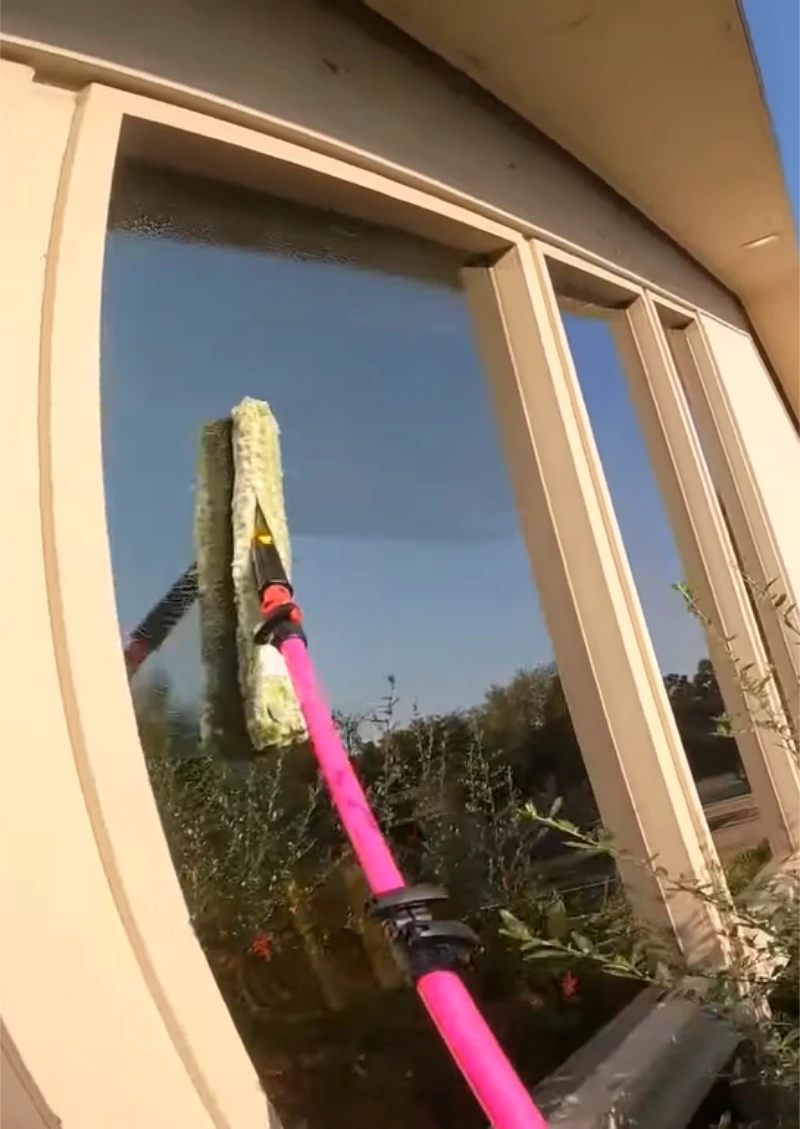
- Wash with a soft applicator or a water-fed pole and purified water, or a hand-applied solution and squeegee for heavier film.
- Rinse and wipe the frames so salt spray does not drip back onto clean glass.
- Check the glass at an angle to the light, where leftover haze shows.
How often does coastal glass need cleaning?
Ocean-facing and bluff-top glass usually needs attention every one to two months if you want the view always clear, and at least quarterly. Details are in how often to clean windows near the ocean.
Cleaning light salt film yourself
Rinse with fresh water first, use a soft cloth or applicator and never wipe dry salt or sand across the glass. Wipe the frames too, so spray does not run back onto the pane. Heavy or long-neglected film, upper-story glass and anything that looks etched is better handled by a professional. If the spots are white rings from sprinklers instead of a general haze, see hard water stain removal.
Salt film, hard water or plain dirt?
| What you see | Likely cause | What helps |
|---|---|---|
| Even milky haze, worst on ocean-facing glass | Salt film | Wet the glass first, wash, then rinse with purified water |
| White rings or spots near sprinklers | Hard-water minerals | See hard water stain removal |
| Gritty feel on frames and sills | Salt and sand | Pre-clean frames and tracks before the glass |
| Dark specks in corners and tracks | Mildew from damp air | Clean tracks and keep them dry |
| Streaks that appear after fog | Water marks on salty glass | Regular cleaning with the right tools |
Frames, tracks and hardware
Salt does not stop at the glass. On aluminum frames it can cause white, powdery oxidation and pitting, and on hinges, locks and sliding hardware it can cause stiffness and corrosion. Wiping frames and tracks during each clean removes the salt before it does lasting damage, and a quick look at the frames lets us point out early signs of corrosion.
Which side of the house gets the most
Ocean-facing glass takes the direct spray and the most salt, but salty moisture settles on every side of a house. The pattern changes through the year: summer sun dries spray quickly and leaves a tighter film, while May Gray and June Gloom fog keep glass damp.
Keeping glass clearer between visits
- Rinse light salt off with fresh water before wiping.
- Avoid wiping salt or sand dry, which scratches glass.
- Keep sprinklers off the glass so you do not add hard-water spots to the salt.
- Wipe tracks when you notice sand or damp.
- Set a regular schedule so film never builds up. See how often to clean windows near the ocean.
Frequently asked questions
Why are my windows hazy even after I wash them?
A milky haze that returns quickly is usually salt film, or mineral deposits from sprinklers. Ordinary glass cleaner and a dry cloth tend to smear it. Wetting the glass first and using the right tools, followed by a purified-water rinse, removes it.
How far inland does salt spray reach?
Coastal wind can carry salt spray several miles from the water, so homes that are not on the beachfront still collect it. Exposure is strongest on ocean-facing sides and closer to the coast.
Can salt damage windows?
Yes. Salt and sand can scratch glass if wiped dry, and salt can corrode metal frames, especially aluminum, and build up in tracks. Regular cleaning prevents most of that damage.
How often should coastal windows be cleaned?
Ocean-facing and bluff-top glass usually needs cleaning every one to two months for a consistently clear view and at least quarterly. Homes farther from the water can often go three months or longer.
Is it safe to wipe salt off windows with a dry cloth?
No. Dry salt and sand are abrasive and can scratch glass. Wet the glass first so the salt dissolves, then wipe or squeegee it off.
Does rain wash salt off windows?
Rain can dilute salt but rarely cleans glass fully. It often leaves streaks and spots, so a rainy winter does not replace cleaning.
Get a free window cleaning quote in San Clemente
Tell us how many windows you have and what you see on the glass. We send a written quote before any work starts.