Hard water · San Clemente, CA
Hard Water Stain Removal on Windows in San Clemente, CA
Those white spots are not dirt. They are minerals, and regular glass cleaner will not touch them.
Get a Free QuoteLast updated October 19, 2026 · Written by the Window Care San Clemente team
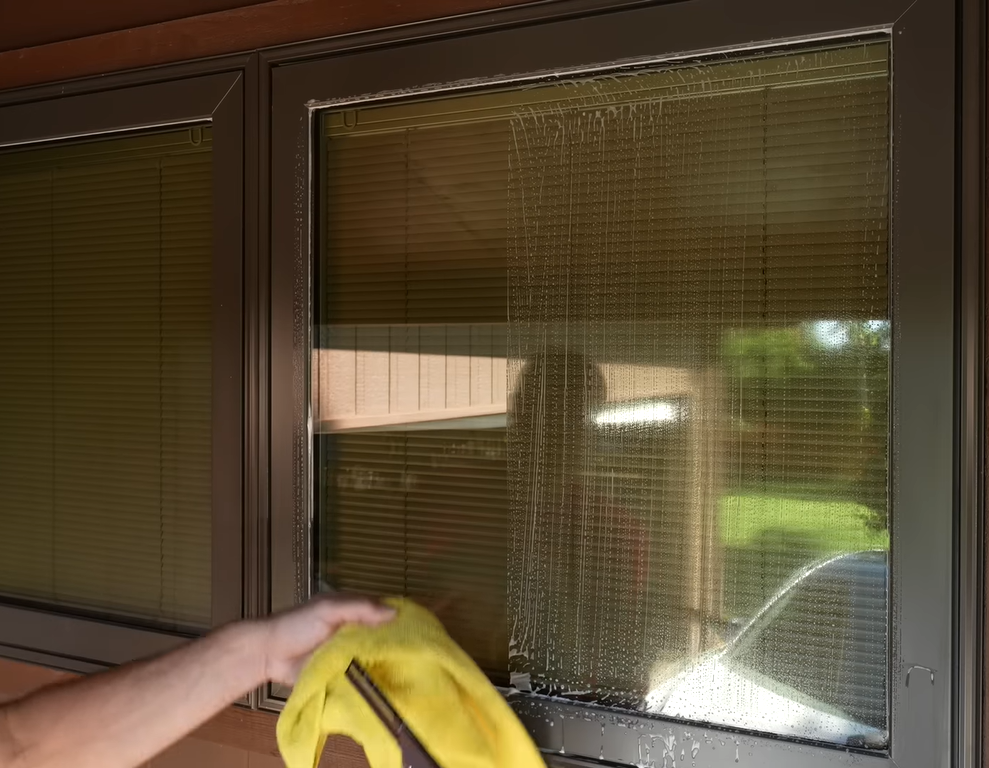
What causes hard water spots on windows?
Water carries dissolved minerals. When a drop dries on glass the water evaporates and the minerals stay, forming white rings or a chalky haze. Sprinklers that spray windows are the most common cause on lower and ground-floor glass, and strong summer sun dries drops quickly, which leaves the deposits harder.
Why San Clemente glass gets them
- Imported water. The city reports that its drinking water is largely imported surface water supplied through the Metropolitan Water District of Southern California, with sources that include the State Water Project and the Colorado River.
- Different suppliers in different areas. Some areas, including Talega, are served by another agency (Santa Margarita Water District). Check your water bill for your supplier and read that agency’s annual water quality report for hardness.
- Irrigation. Master-planned neighborhoods with lots of landscaping, such as Talega and Forster Ranch, have a lot of sprinkler overspray.
Deposit or etching?
This is the question that decides what is possible. Surface deposits sit on top of the glass and can be dissolved. Etching is physical damage: minerals left long enough can attack the glass surface, and the spot becomes part of the glass. If spots remain after a proper mineral-dissolving treatment they are usually etched. Oxidized frames can also drip onto clean glass and look like spots. We check before we start and tell you what is realistic.
How we remove hard water stains
- Inspect the glass and frames and test a small area.
- Treat mineral deposits with a mineral-dissolving cleaner suited to the glass and frame finish.
- Work the glass with non-abrasive tools. We do not use wire-bristle brushes or scrape dry glass.
- Rinse with purified water so no new minerals are left behind.
- Wipe frames and sills, and check the glass as it dries.
Polishing etched glass is a separate specialist job and is quoted separately.
How to keep spots from coming back
- Adjust sprinkler heads so they do not hit windows.
- Clean on a regular schedule so deposits do not bake on over the summer. See how often to clean windows.
- Check aluminum frames for oxidation that drips onto the glass.
Can I remove them myself?
Light film sometimes responds to a mild acidic cleaner such as diluted white vinegar. Test a small area, rinse well, keep acidic products off frames and seals that they can damage, and never use wire-bristled brushes or a razor on dry glass. Stubborn deposits are best left to a professional, because the wrong tool can scratch the glass permanently. For salt haze instead, see salt film and coastal glass care.
Hard water spots vs etching: how to tell
| Surface mineral deposits | Etched glass | |
|---|---|---|
| Look | White rings or a chalky haze | Cloudy or frosted patches that stay put |
| Response to treatment | Dissolves with a mineral-dissolving cleaner | Remains after proper treatment |
| Usual cause | Recent or repeated sprinkler overspray | Long-term exposure to mineral-laden water |
| Outlook | Usually removable | May need glass polishing or replacement |
A professional can tell by testing a small area.
Reading your water report: what the numbers mean
Water hardness is reported in milligrams per liter (mg/L, the same as parts per million) or in grains per gallon, and one grain per gallon equals 17.1 mg/L. The USGS classifies water as soft up to 60 mg/L, moderately hard from 61 to 120, hard from 121 to 180, and very hard above 180. Your supplier publishes an annual water quality report, so look for the hardness figure. Harder water leaves a heavier deposit as each drop dries.
Why purified water prevents spots
Purified water, such as reverse-osmosis or deionized water, has had its dissolved minerals removed. With no minerals in the drop, nothing is left on the glass when it dries. That is why a purified-water rinse leaves no spots, and why a rinse with ordinary tap water can leave new ones.
Where hard water shows up on a house
- Lower and ground-floor windows within reach of sprinklers
- Sliding glass doors and patio glass
- Garage door and entry glass
- Glass railings, windbreaks and pool-side glass
- Frames and sills below sprinkler heads
Fixing it at the source: sprinklers
Cleaning removes spots, but sprinklers keep making them. The cheapest fixes are adjusting or replacing heads so they do not hit windows, changing the watering schedule so glass is not wet in strong sun, and switching beds near windows to drip irrigation. Many landscapers can do this in one visit.
Sources and further reading
Frequently asked questions
Can hard water spots be removed from windows?
Often, yes. Surface mineral deposits can usually be dissolved with the right cleaner and rinsed with purified water. If the minerals have etched the glass, cleaning may not fully remove the marks, and a professional can tell you before work begins.
Why do spots come back after cleaning?
Usually because sprinklers or other water are still hitting the glass and drying there. Adjusting sprinkler heads and cleaning on a regular schedule stops deposits from building up again.
Does vinegar remove hard water spots?
Diluted white vinegar can dissolve light mineral film. Stubborn deposits need stronger products, and acidic cleaners can harm some frames and finishes. Test a small area, rinse well and never scrape dry glass.
Can sprinklers ruin windows?
They can. Repeated wetting and drying lets minerals build up and, over time, etch the glass. Aiming sprinklers away from windows is the cheapest fix.
What is the difference between hard water spots and etching?
Spots are mineral deposits that sit on the glass and can usually be dissolved. Etching is physical damage to the glass surface caused by long exposure, and it stays after proper treatment. A professional can tell by testing a small area.
How do I know if my water is hard?
Check your water supplier’s annual water quality report for the hardness figure, or look for white scale on faucets and shower glass. The USGS calls water above 180 mg/L very hard.
Get a free window cleaning quote in San Clemente
Tell us how many windows you have and what you see on the glass. We send a written quote before any work starts.